
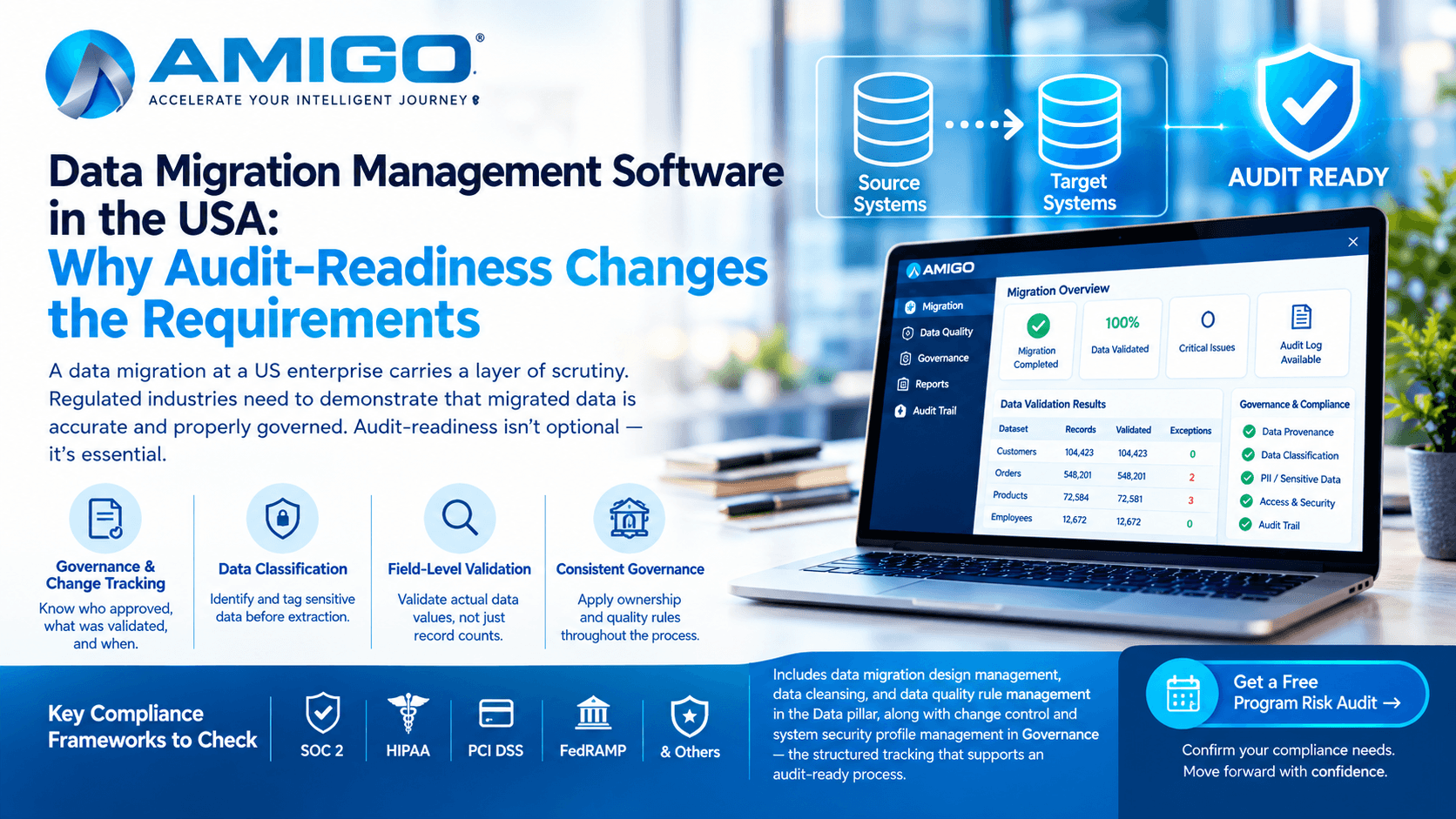
Data Migration Management Software in the USA: Why Audit-Readiness Changes the Requirements
A data migration at a US enterprise carries a layer of scrutiny that doesn't show up in a generic migration checklist. Regulated industries — healthcare, financial services, insurance, government contracting — routinely need to demonstrate, after the fact, that migrated data is accurate and that the process was properly governed. Unplanned downtime during a migration cutover also carries a real cost: IDC research cited by LatentView puts the average cost of unplanned enterprise downtime at $250,000 per hour, which is the scale of exposure a poorly governed cutover can create.
Generic migration tools built primarily around "did the load complete" often don't account for the audit trail and data-quality evidence regulated organizations actually need to produce.
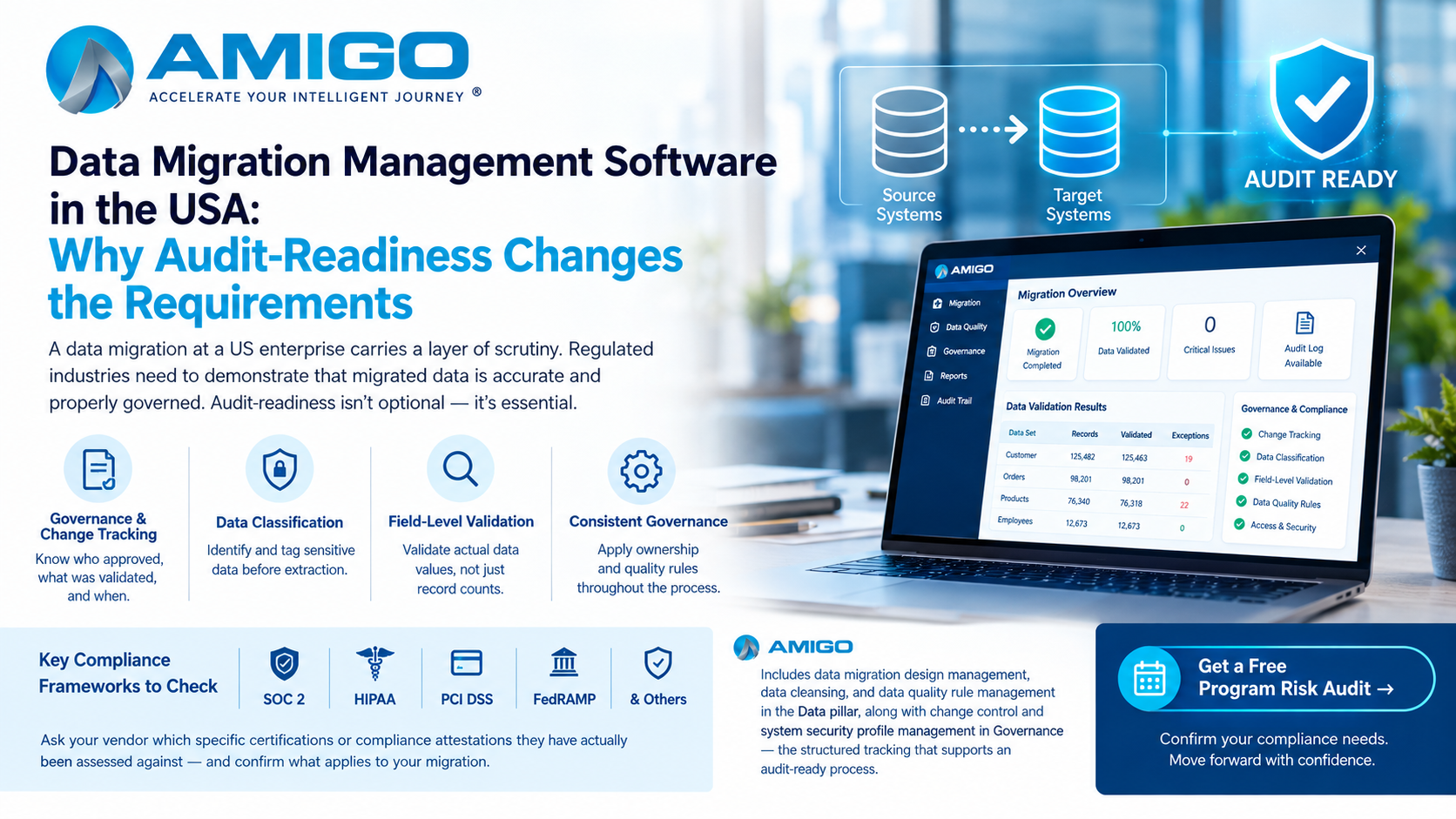
What audit-ready migration software generally needs to provide
A documented governance and change-tracking record. Who approved the migration, what was validated, and when — captured as the migration runs, not reconstructed after the fact when an auditor asks.
Data classification before extraction. Identifying and tagging sensitive data repositories before migration begins, so records don't move into a less-controlled environment by accident.
Field-level validation, not just volume checks. A record count that matches doesn't demonstrate the accuracy an internal or external audit typically wants to see. Validating individual field values against defined tolerance bands produces stronger evidence than a count-only check.
Consistent data governance rules applied throughout. Defined ownership and quality rules for migrated data, tracked as part of the process rather than assumed after go-live.
What this means for evaluating migration software in the US
It's worth asking any vendor directly which specific compliance frameworks or certifications (SOC 2, HIPAA, PCI DSS, FedRAMP, or otherwise) their platform has actually been assessed against, rather than assuming general governance and validation features imply formal compliance certification — they're related but not the same thing. A platform can have strong data governance and validation capabilities without carrying a specific regulatory certification, and it's worth confirming which applies before a compliance-sensitive migration.
AMIGO includes data migration design management, data cleansing, and data quality rule management as part of its Data pillar, along with change control and system security profile management as part of its governance capabilities — the kind of structured tracking that supports an audit-ready process. For specific certifications or compliance attestations relevant to a regulated migration, confirm current status directly with the AMIGO team via the features page or SAP-specific migration capabilities.