
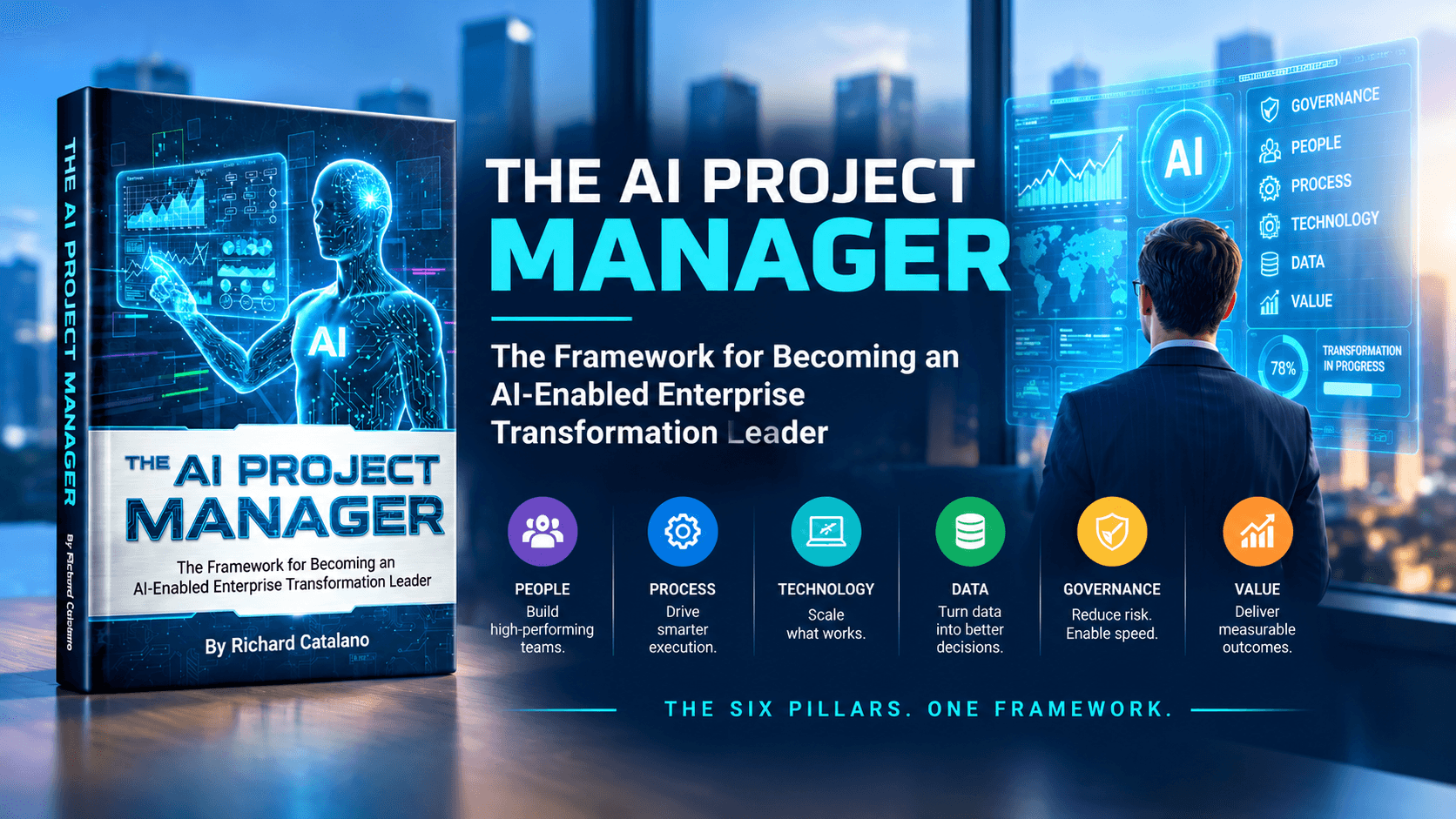
The job title hasn't caught up to the job yet. Most people still called "Project Manager" today are doing work that looks nothing like project management did five years ago and the ones doing it well are becoming something closer to an AI Project Manager: part delivery lead, part data interpreter, part AI orchestrator.
Here's what that actually means, and why it matters for anyone running enterprise transformation programs.
AI Project Manager, defined
An AI project manager is a project leader who uses AI not as a side tool but as an instrumented layer across the entire delivery lifecycle business case modeling, risk detection, resource forecasting, defect triage, benefits tracking rather than a chatbot bolted onto a status report.
The distinction matters. Most "AI-powered" PM tools today mean a copilot that summarizes meeting notes. A true AI project manager role and the platforms built to support it treats AI as infrastructure across governance, people, process, technology, data, and value simultaneously.
Why the role is emerging now
Three forces are colliding:
- Transformation failure rates haven't moved. Roughly two-thirds of enterprise transformations still fail to deliver on time, on budget, or with the promised value the same failure rate organizations have tolerated for over a decade of "digital transformation."
- AI can now do PM-adjacent work at scale. Drafting test plans from design artifacts, flagging capacity conflicts before they hit, auto-scoring change requests work that used to consume a PM's week can now run in the background.
- The PMO is under more scrutiny than ever. Boards want measurable ROI, not status decks. That pressure is pushing PMs toward roles that look more like value stewards than schedule trackers.
What an AI project manager actually does differently
Runs financial modeling live, not once. Instead of a static business case nobody revisits, an AI project manager works from a model that recalculates ROI, NPV, and IRR as scope, timeline, or cost assumptions shift catching value erosion before it's a surprise at the steering committee.
Treats risk detection as continuous, not periodic. Rather than a monthly RAID log review, AI-instrumented delivery flags resource conflicts, schedule slippage, and dependency risk as they emerge.
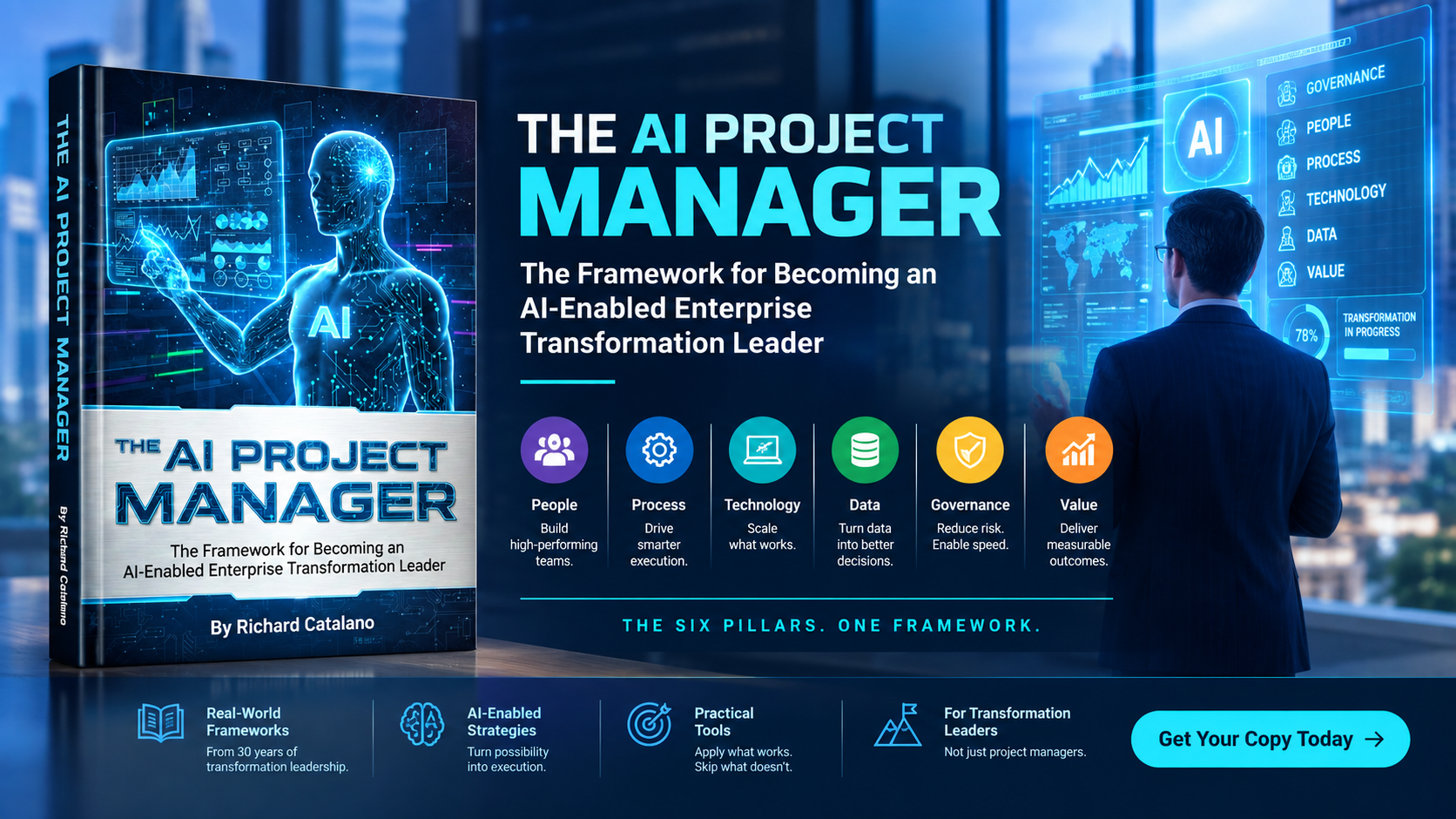
Uses AI across all six delivery pillars, not one. Governance, people, process, technology, data, and value each get their own AI use cases RAID pattern detection, adoption-risk scoring, process bottleneck flagging, defect triage, migration validation, and benefits variance tracking rather than a single generic assistant.
Still owns the judgment calls. AI surfaces the signal. The AI project manager still makes the call on trade-offs, stakeholder conflicts, and go/no-go decisions the role shifts what they spend time on, not who's accountable.
The skills gap this creates
Traditional PM training PMP, CAPM, Prince2 teaches schedule, scope, and risk management, largely mechanical processes now assisted or automated. What it doesn't teach: how to interpret AI-flagged risk, how to structure a program so AI has clean signal to work with, or how to run governance in a system where the RAID log updates itself.
That gap is exactly what a dedicated methodology has to close which is the premise behind The AI Project Manager book and the 14-module certification track built around it: turning project managers into what the framework calls Transformation Architects, trained specifically to operate inside AI-instrumented delivery.
What this means if you're running a transformation program
If your PMO is still running governance on spreadsheets and monthly status decks, the AI project manager conversation isn't really about a new job title it's about whether your delivery model can keep pace with programs that now move faster than manual reporting cycles allow. The AMIGA Framework maps this out across its six pillars, and the platform itself is built around 260+ AI use cases instrumented across governance, people, process, technology, data, and value not a single assistant bolted onto a task list.